
Güesa / Gorza
The echo of water between stone and frontier

The echo of water between stone and frontier
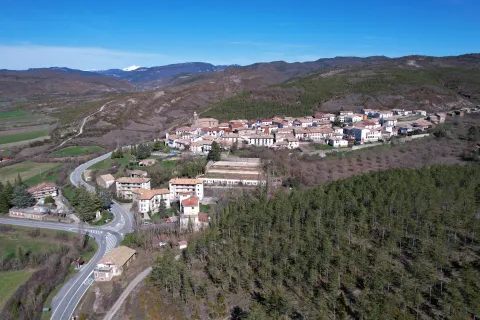
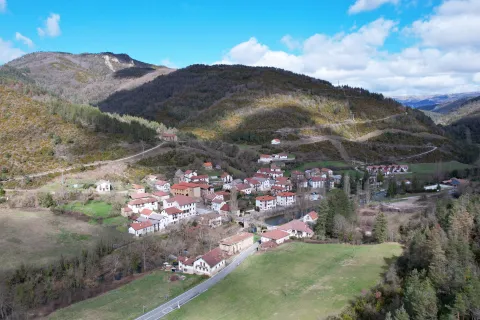
Where the Salazar widens and breathes amongst folds of rock and open ravines, time flows effortlessly, as if it had never needed to move forward. In Güesa, the atmosphere is sustained by the solidity of its houses and a memory that can be sensed. It is a place where history—marked by war and nobility—coexists with everyday life, and where water and stone converse in hushed tones beneath the shifting light of the Pyrenees.
The municipality lies at an altitude of 656 metres, at the southern end of the Valle de Salazar . The area unfolds across a landscape of contrasts: eroded formations alternating with more rugged terrain, reaching its most striking expression in the Jaurós ravine. Since gaining administrative independence in 1847, Güesa has maintained a deep connection with the valley, sharing pastures, memories and traditions under the auspices of the General Assembly. In this area, traces of the Salacenco dialect of Basque still survive, as does the symbol of the wolf and the lamb, which continues to feature on the coats of arms adorning the façades.
The municipality is divided into three settlements that preserve different ways of inhabiting the landscape:
To explore Güesa is to enter a landscape where history remains silent.

Street in Guesa with a stone church and bell tower and traditional houses.

Stone church with a bell tower and square tower in Guesa, traditional Pyrenean religious architecture.

Cobblestone street in Guesa with traditional stone houses.
Resuelve las dudas más habituales sobre los diferentes parques y zonas naturales: cómo llegar, qué visitar, normas, rutas y servicios para planificar tu experiencia con facilidad.


Online
