
Ezcároz / Ezkaroze
The heart of the valley and the memory of water

The heart of the valley and the memory of water
Where the River Salazar lingers and traces its course calmly, the stone of the houses holds a memory that needs no telling. In Ezcároz / Ezkaroze, the atmosphere is felt in the rhythm of its streets and in the echo of ancient legends that still linger by the water. It is a land of quiet serenity, where river traditions and livestock farming intertwine naturally, allowing the landscape and history to unfold unhurriedly under the constant presence of Abodi.
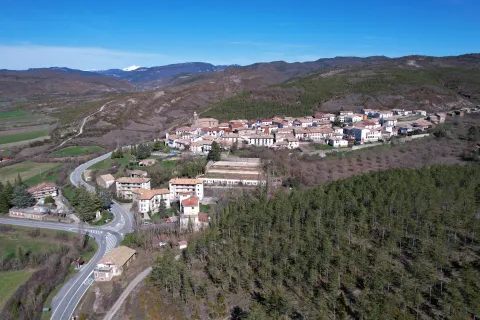
Ezcároz / Ezkaroze serves as the central and administrative hub of the Salazar Valley ( ), situated at an altitude of 742 metres in a setting where the river shapes both life and the landscape. Its 29 km² municipal area is characterised by continuous forests of beech and Scots pine, which surround the village and define its character. Over time, the village has maintained a notable degree of autonomy and has served as the seat of the Valley General Assembly, consolidating its role as the organising hub of the region. Cultural elements such as the Salacenco dialect of Basque and the heraldic symbols still preserved on the façades remain part of its identity, bearing witness to a memory that lives on.
The town boasts a heritage where water and stone engage in a constant dialogue.

Traditional stone and wood houses in Ezcaroz with a meadow of yellow flowers and forested mountains in the background.

Ezcaroz Town Hall with traditional Pyrenean architecture, a white facade, and dark stone masonry.

Central square of Ezcaroz with traditional Pyrenean architecture, white houses, and reddish roofs.
Resuelve las dudas más habituales sobre los diferentes parques y zonas naturales: cómo llegar, qué visitar, normas, rutas y servicios para planificar tu experiencia con facilidad.
It is located in the northeast of Navarra, occupying the central part of the Salazar Valley, about 84 kilometers from Pamplona and very close to the Irati Forest.
According to the official INE register of 2025, the town of Ezcároz / Ezkaroz has 298 inhabitants.


Online
