

The stone that listens to the river
On the right bank of the Arga, the stone of the bridge seems to murmur at the passing of walkers crossing the route between Pamplona and the northern hills. Zuriain reveals itself in the Gothic solidity of San Millán and in the traces of an old flour mill, which persists beneath the constant murmur of the riverbank. Here, the memory of medieval lordship and the legacy preserved in the old Caja Rural intertwine with daily life, allowing the footsteps of pilgrims and locals to blend with the mineral substance of the cereal fields, marking a time that remains alive between river and valley.
Zuriain general information
Zuriain stands in the heart of the Esteribar Valley , where the community lives in a settlement documented since 1090, named after a former resident. Its history reveals a past of lordship shared between the Crown and Santa María de Roncesvalles, with an administrative organisation that lasted until the 19th century through rotations among the local houses. Today, life follows the rhythm of the seasons, with wheat, barley and broad beans setting the pace in the fields, whilst the north winds silently watch over the course of the River Arga.
What to see in Zuriain?
Zuriain’s heritage allows visitors to observe the union between Gothic faith, the historical engineering of the river and the legacy of St James’s hospitality.
- Church of San Millán: This Gothic-style building (15th–16th centuries) dominates the village with its tower and a nave divided into three sections. Its architecture reflects the valley’s technical evolution through its star-shaped ribbed vaults and a Rococo-style high altarpiece dating from the second half of the 18th century.
- Image of the Virgin and Child: Located inside the church, this medieval carving safeguards the spiritual memory of the village, having retained its original structure despite subsequent restorations.
- Bridge over the River Arga: A stone structure spanning the river on the road to Ilurdoz, reflecting the importance of historical transport links and access to the river’s resources within the municipality.
- Old Flour Mill: The nature of this building reflects the town’s industrial past, when the water of the Arga was harnessed to provide milling services for the valley’s residents.
- Route of the Camino de Santiago: The route of the Via Aquitania and the current French Way cross the area, integrating the flow of pilgrims into the everyday life of the riverbank.

Traditional stone houses in Zuriain, next to a bridge with a metal railing and vegetation.

Traditional stone and white lime house with a wooden balcony in Zuriain, with a green meadow and vegetation nearby.

Group of traditional stone houses in Zuriain, one of them partially covered in ivy, with a mountain in the background.
Preguntas frecuentes
Resuelve las dudas más habituales sobre los diferentes parques y zonas naturales: cómo llegar, qué visitar, normas, rutas y servicios para planificar tu experiencia con facilidad.
Zuriain is a Spanish locality belonging to the municipality of Valle de Esteribar, in the Merindad de Sangüesa, located 12 kilometers from Pamplona on a plain on the right bank of the Arga river.
Yes, the route of the Camino de Santiago (French Way) passes through the municipal territory, becoming a landmark on the route that heads towards Pamplona from the north.
Zuriain offers rural accommodation, with houses such as Elbegi, Etxegibel, Beitikoetxea, and Casa de Patxi. The local gastronomy is linked to the valley's tradition and to hospitality towards pilgrims.
The town of Zuriain has approximately 74 inhabitants.
You might also be interested in
-
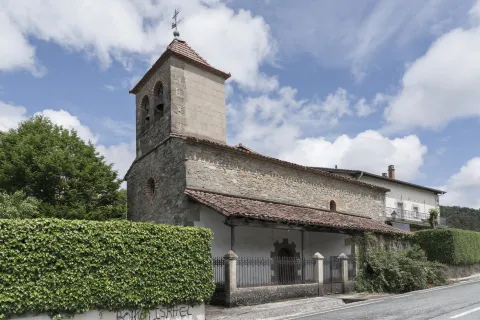
Agorreta
Here, the stone and the landscape tell stories not written in books but on the walls of the farmhous… -
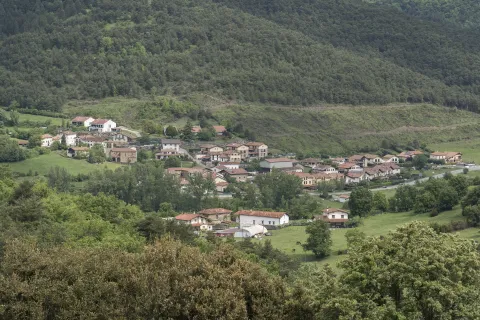
Urdaitz/Urdániz
On the right bank of the Arga, time is not measured in calendars but in traces: those left by water … -
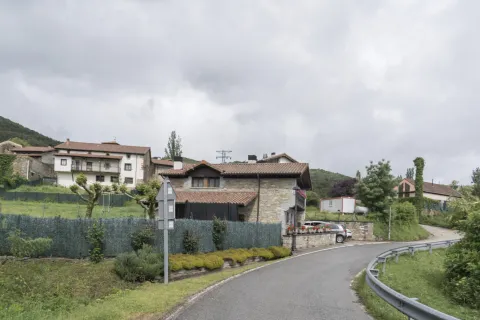
Sarasibar
Sarasibar lies on the right bank of the River Arga, as if aware of its lineage. -
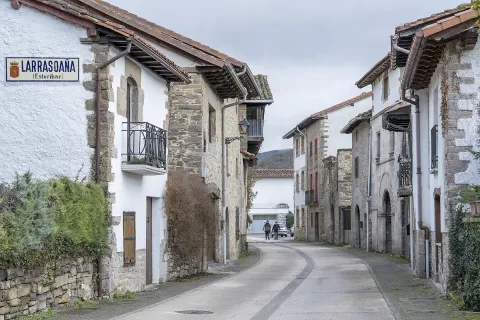
Larrasoaña
Larrasoaña does not spread out: it stretches out.
AltaNavarra Chat
Online
