
Saigots
A stone threshold in the heart of Esteribar

A stone threshold in the heart of Esteribar
On the right bank of the Arga, Saigots stands as a pause along the route. The medieval bridge, with its patient stonework, not only spans the riverbed: it guards centuries of passage towards the Alduides, the footsteps of mule drivers, walkers and travellers heading north. Every stone seems to recall the weight of those footsteps and the murmur of conversations that crossed from bank to bank.
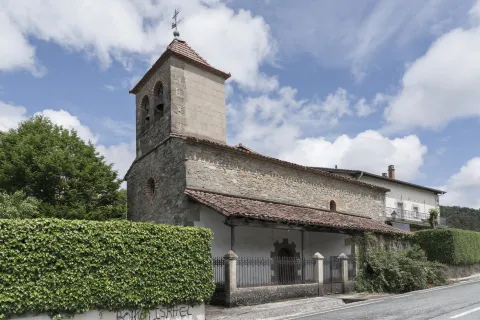
The atmosphere of the place is encapsulated in the austerity of the parish church of San Bartolomé and in the memory of the ancient grain taxes, when the royal manor governed life with discreet firmness. The old mills and the system of aldermen who governed in turn amongst the working houses form part of a chronology that unfolds without fanfare, as if the entire valley were watching over the road to France.
Saigots lies in the central part of the Esteribar Valley , a small enclave in terms of population but rich in history. Its inhabitants inhabit a municipality bordered to the north by Urtasun and to the south by Zubiri , in a landscape shaped by the River Arga and the historic routes that once criss-crossed the region.
This municipality, belonging to the Merindad of Sangüesa, was formerly a royal domain. From the 14th century onwards, institutions such as Santa María de Roncesvalles owned palaces and estates within its boundaries, leaving a documentary legacy that still defines its identity. Daily life revolves around the river, maintaining its status as a key junction on the route to France, where the administration and the landscape interact seamlessly.
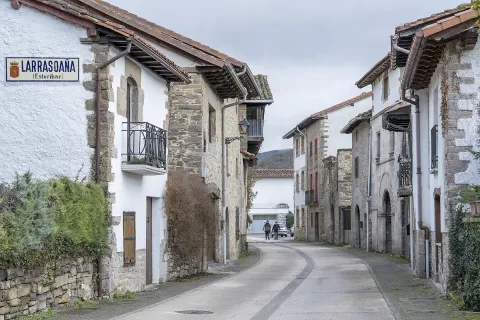
In Saigots, every stone reveals the valley’s role as a thoroughfare.

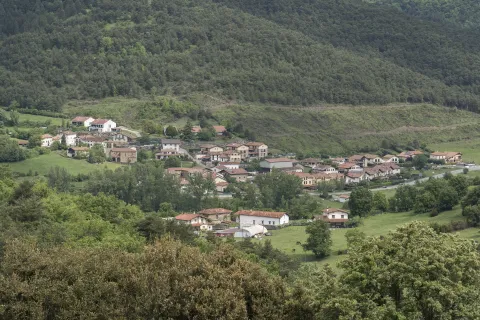
Group of houses and a church with a wooded mountain in the background and a children's playground in the foreground in Saigots.

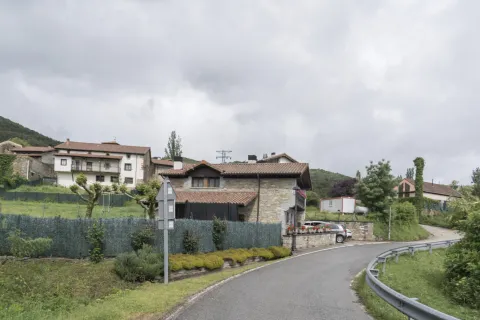
Street in Saigots with houses on one side and vegetation on the other; in the background, part of a fronton court can be seen.

Green, two-walled fronton court in Saigots next to a traditional house.
Resuelve las dudas más habituales sobre los diferentes parques y zonas naturales: cómo llegar, qué visitar, normas, rutas y servicios para planificar tu experiencia con facilidad.
Online
