
Leranoz
Where the forest bends its memory towards the water

Where the forest bends its memory towards the water
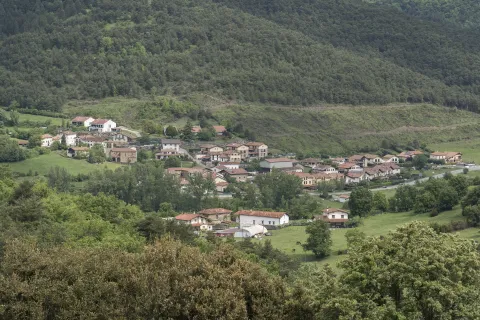
Leranoz stands like a listening spur. Here the beech forest breathes to the rhythm of the wind and the pastures bear the ancient footprints of those who walked here before. The village does not intrude upon the landscape: it emerges from it, as if the stone had decided to arrange itself into houses.
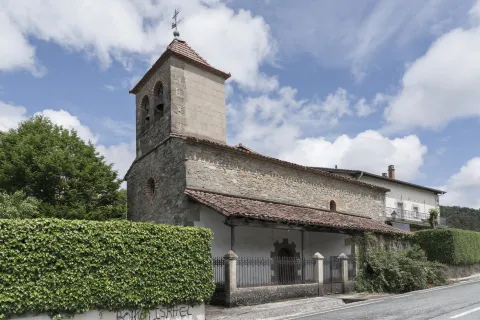
The church of San Adrián, built of ashlar, holds the silence of the centuries, and on the edges of the hill the memory of the ancient ‘hunters’ still echoes—villagers who delivered oats to the Kingdom whilst weaving their lives between taxes, seasons and shared shifts. Everything in Leranoz seems to unfold without haste: the flow of water towards the basin, the rotation of the working houses, the stony vigilance of its walls.
In the heart of the Esteribar Valley, Leranoz is a small mountain hamlet where the community keeps alive a human scale that has almost disappeared elsewhere. It borders Urtasun to the north and Urdániz to the south, and in the old 14th-century tax records it appeared linked to Gurbindo, as if the villages were branches of the same root.
It was a royal manor, and until the mid-19th century its government was organised between the valley’s deputy and the alderman, elected in turn from among the local households. That ancient rotation still seems to pulse through the way the village sees itself: as a small organism of stone and memory. Today, as part of the Auñamendi region, Leranoz remains embraced by local roads and pre-Pyrenean slopes where the forest dictates its own calendar.
Leranoz’s heritage allows one to observe the union between the architectural transformation of the 17th century and the traces of ancient communal practices.

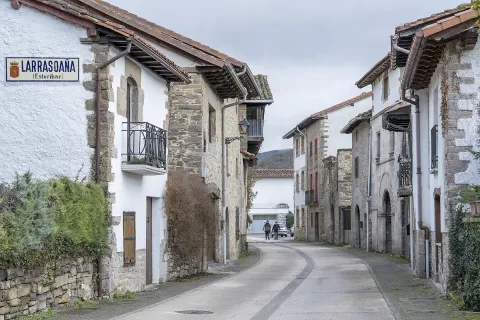
Cobblestone street of Lenaroz with grey stone Pyrenean rural architecture, parish church in the background.

Stone church in Lenaroz, Navarrese Pyrenees, surrounded by traditional farmhouses and a green meadow.

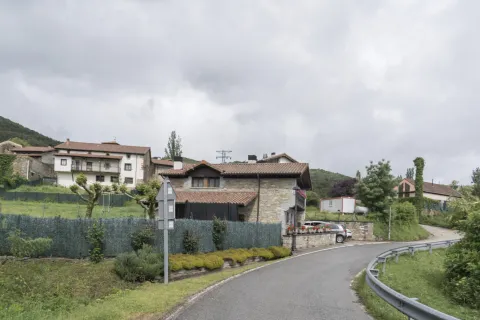
Stone farmhouse in Lenaroz with a wooden balcony, Navarrese Pyrenees.
Resuelve las dudas más habituales sobre los diferentes parques y zonas naturales: cómo llegar, qué visitar, normas, rutas y servicios para planificar tu experiencia con facilidad.
Online
