
Inbuluzketa
Ancient walls and enduring promises

Ancient walls and enduring promises
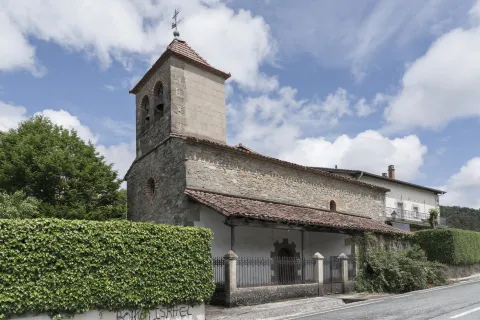
Inbuluzketa emerges as a small stone enclosure where time is measured not by clocks, but by generations. The walls of San Martín and the silhouette of its armoury palace evoke a past of lineages and coats of arms, when the manor was more than a jurisdiction: it was a way of inhabiting the world. Here, the silence of the streets preserves the memory of a rural savings bank founded on trust, where a word was enough to sustain harvests and hopes.
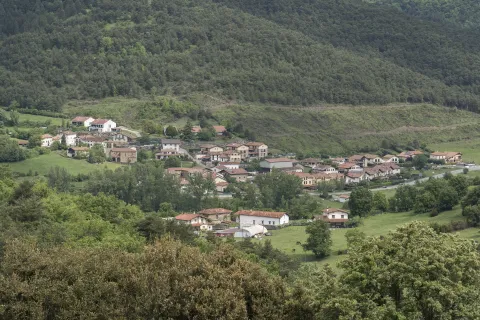
Here, the boundaries intertwine with Leránoz to the north and with Larrasoaña and Urdaniz to the south, whilst the River Arga runs alongside the landscape. Documented as early as 1268 as a noble manor, the parish retains this historical imprint in its organisation and in the lives of its inhabitants, who keep alive the intimate scale of the community in an environment shaped by the river and memory.
Inbuluzketa’s heritage offers a glimpse of the fusion between medieval faith, the noble architecture of the old manor houses and traces of Renaissance art.

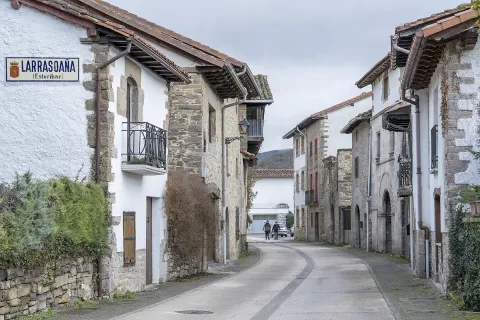
Group of stone houses in Inbuluzketa, Navarrese Pyrenees, on a cobblestone street with a moss-covered tree.

Group of stone houses in Inbuluzketa, Navarrese Pyrenees, on a cobblestone street with a moss-covered tree.

Group of stone houses in Inbuluzketa, Navarrese Pyrenees, on a cobblestone street with a moss-covered tree.
Resuelve las dudas más habituales sobre los diferentes parques y zonas naturales: cómo llegar, qué visitar, normas, rutas y servicios para planificar tu experiencia con facilidad.
According to 2020 records, the municipality of Inbuluzketa has 40 inhabitants.
Online
