

Stone, water and lineage: echoes of a stately past
Here, the pastures and forests tell of centuries of life intertwined with the nobility of old. In this corner of the Esteribar Valley , the stonework of the Cabo de Armería Palace and the constant murmur of the stone fountains seem to hold time at a standstill, where stately grandeur coexists with the daily life of the hamlet that watches over its boundaries with Agorreta and Antxoriz . Every Gothic detail on the façades, every sprout in the beech forest and every bend in the River Arga reveal the persistence of a heritage that has kept the identity of this region intact since the 14th century.
Ilurdotz general information
Ilurdotz forms part of the municipality of Esteribar and is surrounded by an area of great forestry value. The community lives in a village where the history of the manor can be felt in every stone and alleyway. As early as the 14th century, the monastery of Santa María de Roncesvalles received income from the area, having acquired the estates of Gonzalo Ruiz de Olleta around 1322. The 14 ‘houses of use’ organised daily life and the administration of the council, a system that remained in place until the 19th century, managed by the residents themselves on a rotating basis.
What to see in Ilurdotz?
Ilurdoz reveals a tapestry of nobility, water and architecture that spans the centuries.
- Cabo de Armería Palace: A testament to the town’s noble significance, its existence has been officially recorded since 1723. The coat of arms of this estate, described in the Book of Arms, features an azure background with three silver panels arranged in a triangle, signifying the heritage of the Bayona and Sagaseta families of Ilurdotz.
- Civil architecture with Gothic elements: A stroll through the streets reveals houses that retain Gothic stonework and features, with a 16th-century house with a tower standing out in particular, remaining a landmark of the valley’s defensive and residential architecture.
- Fountains and drinking troughs: Water features are integrated into the village centre through its 1789 fountain and a traditional drinking trough, elements that bear witness to historical practices and the care of livestock on communal land.
- Parish Church of Our Lady of the Rosary: This building safeguards the religious spirit of the community. Among its treasures is a 16th-century processional cross, a piece of stone and metal work depicting the Virgin Mary against a background of flames.

Stone building in Ilurdoz, Navarrese Pyrenees, with an aged wooden door.

Stone church with bell tower in the square of Ilurdoz, next to a playground, with mountains in the background.

Stone church with a bell tower in the village of Ilurdoz, Navarrese Pyrenees, flanked by traditional stone architecture.
Preguntas frecuentes
Resuelve las dudas más habituales sobre los diferentes parques y zonas naturales: cómo llegar, qué visitar, normas, rutas y servicios para planificar tu experiencia con facilidad.
The town of Ilurdoz has about 70 inhabitants.
Ilurdoz is a Navarrese toponymic anthroponym that comes from the personal name Ilurdo. Its origin combines Basque with the locative suffix -oz or -otz (derived from Latin), which indicates possession. Therefore, it is historically interpreted as "the property, the estate, or the place belonging to Ilurdo.
The patron saint festivals of Ilurdoz, in honor of the Virgin of the Rosary, are celebrated every year on the last weekend of June, bringing the community together in a ritual that combines devotion and tradition.
You might also be interested in
-
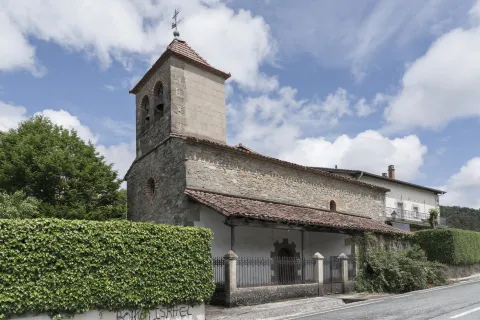
Agorreta
Here, the stone and the landscape tell stories not written in books but on the walls of the farmhous… -
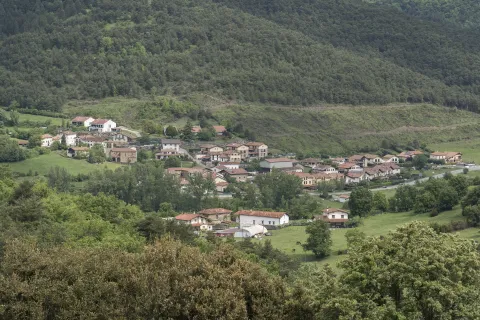
Urdaitz/Urdániz
On the right bank of the Arga, time is not measured in calendars but in traces: those left by water … -
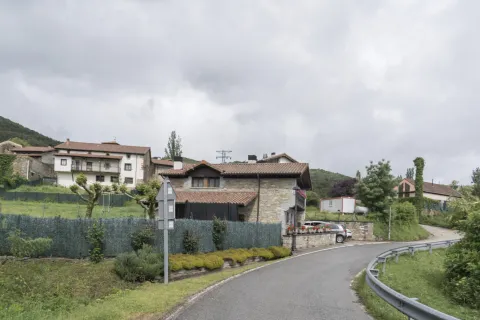
Sarasibar
Sarasibar lies on the right bank of the River Arga, as if aware of its lineage. -
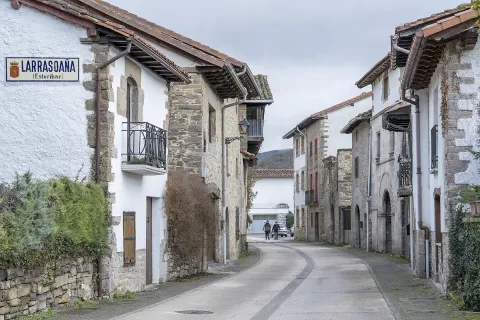
Larrasoaña
Larrasoaña does not spread out: it stretches out.
AltaNavarra Chat
Online
