Eugi
Where water holds what iron remembers

Where water holds what iron remembers
Here, the landscape slopes gently towards a mirror that reflects not only the sky, but also the traces of what once was. Beneath the still surface of the reservoir lie the traces of the old village; on its banks, the stone still speaks the language of the forge. In the heart of the Esteribar valley , the Quinto Real beech forest breathes with ancient patience whilst the water draws a horizontal line that holds decades of transformation.
Eugi does not reveal itself immediately: it is heard. In the murmur of the River Arga beneath the ashlar arches, in the mist rising at dawn, in the rhythm of a community that knew how to move its home without abandoning its memory. The past as a centre of arms manufacturing, water management and daily life beat in unison, as if land and time had agreed to sustain one another.
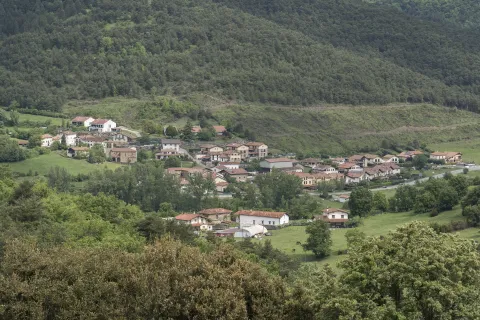
Eugi stands at the headwaters of the River Arga as a place that has learned to reinvent itself without losing its roots. Its inhabitants live in a village that was reborn following the construction of the reservoir in the 1970s, when the old hamlet was submerged and the community embarked on a new beginning.
A former royal manor, this place maintained a close relationship with metallurgy and the defence of the Kingdom for centuries. Today, that heritage coexists with the rubber processing industry and the preservation of a privileged forest environment. The town is situated on the left bank of the river, in constant dialogue with the Baztán and as one of the key settlements in the Esteribar Valley.
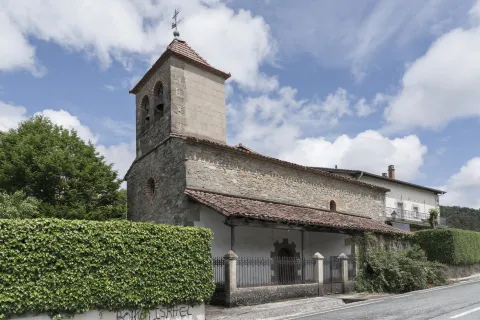
Eugi offers a glimpse into the fusion of industrial archaeology, 19th-century religious heritage and the legacy of hydraulic engineering.
Resuelve las dudas más habituales sobre los diferentes parques y zonas naturales: cómo llegar, qué visitar, normas, rutas y servicios para planificar tu experiencia con facilidad.
Eugi (Eugi in Basque) is a Navarrese toponym of ancient Basque origin, probably related to hills or elevated terrain.
Online
