
Ituren
The land where nature awakens

The land where nature awakens
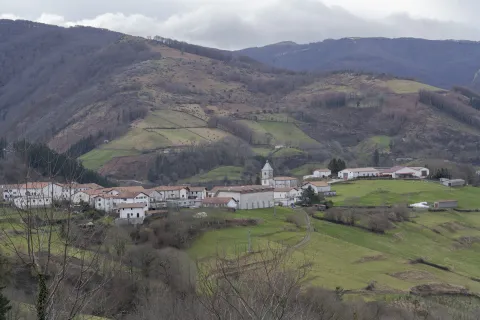
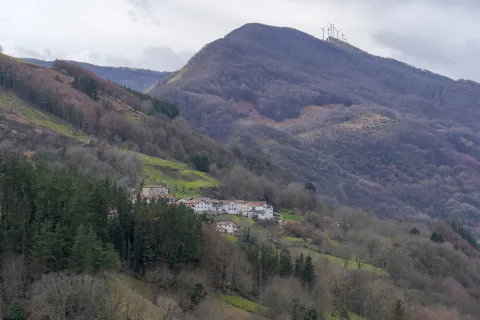
In the damp north-west of Navarre, where the landscape unfolds beneath the gaze of Mount Mendaur, Ituren reveals an identity forged between the ashlar of its palaces and the sound of its cowbells. Comprising the main town of Ituren and the neighbourhoods of Aurtitz and Latsaga, this municipality in Malerreka is home to prehistoric dolmens and medieval bridges spanning the River Ezkurra. Here, the nobility of the ancestral estates coexists with the ancient rites that define the essence of Baztan-Bidasoa, allowing time to pass at an evocative and mystical pace.
Ituren is a territory covering an area of 15.4 km² and bringing together its villages and hamlets under an identity established as a town in the year 1600. Human presence in these lands dates back to the Bronze Age, evidenced by dolmens scattered throughout the territory, such as that of Baikuntzako etxola, which mark the trail of the first settlers.
Since the unification of its neighbourhoods in the 16th century, the community has maintained a cohesion reflected in the ancient town meetings held in the church before the Town Hall was built in the 18th century. Living in Ituren means observing the coexistence of this historical past and the present-day uses of an environment where the Sillería and Mount Ameztia define the character of the place.
Ituren’s heritage allows one to observe the union between faith, prestigious civil architecture and the rites that mark the cycle of nature.
The joaldunak and the carnival: Declared a Festival of Tourist Interest in Navarre, the carnival in Ituren and Zubieta is a unique experience. The joaldunak parade through the streets ringing their large cowbells to awaken nature. It is an ancient ritual that connects winter with the fertility of spring and defines the identity of this part of Baztan.
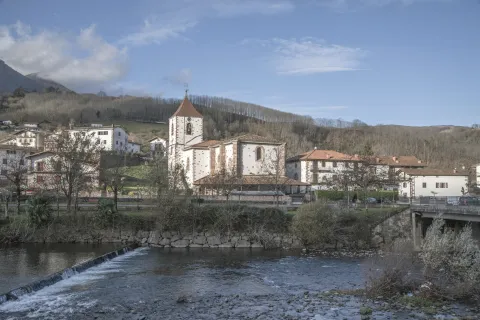
Church of Saint Martin of Tours: Situated on a hillock between the three neighbourhoods, this 16th-century building is the spiritual heart of the village. Its interior houses the 17th-century High Altarpiece, which retains its original polychromy as a testament to religious art in Malerreka.
Ituren Palace: A palace of the Order of the Armoury with roots in the late Middle Ages. The current building dates from 1715 and is notable for its ashlar stone façade and Baroque coat of arms. It is one of the noble estates included in the official register of the former Kingdom of Navarre.
Medieval bridges: The River Ezkurra is spanned by two stone structures with semicircular arches that retain their original design. The Marizeneko zubia bridge is located in the main village, whilst a second bridge links Latsaga with Aurtitz, weaving ancient engineering into the daily life of the valley.
Mount Mendaur and its chapel: The climb to the summit offers views of the chapel and the Baztan-Bidasoa landscape. A place of pilgrimage for locals on Trinity Sunday, the mountain remains a landmark that blends devotion with the forest landscape.

View of traditional Basque houses from a stone bridge with mountains in the background in Ituren.

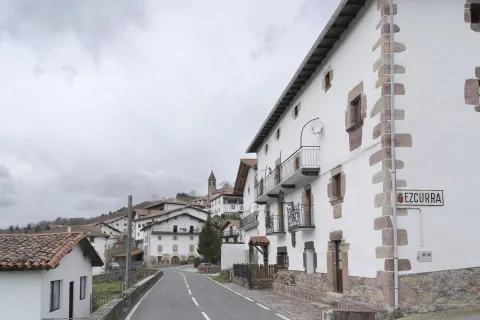
Cobblestone pedestrian street in Ituren with white stone houses of various architectural styles.

White facade with detailed windows, a barred stone gate, and traditional Basque decorations in Ituren.
Resuelve las dudas más habituales sobre los diferentes parques y zonas naturales: cómo llegar, qué visitar, normas, rutas y servicios para planificar tu experiencia con facilidad.
Online
