

Amaiur Castle
The traces of a final siege
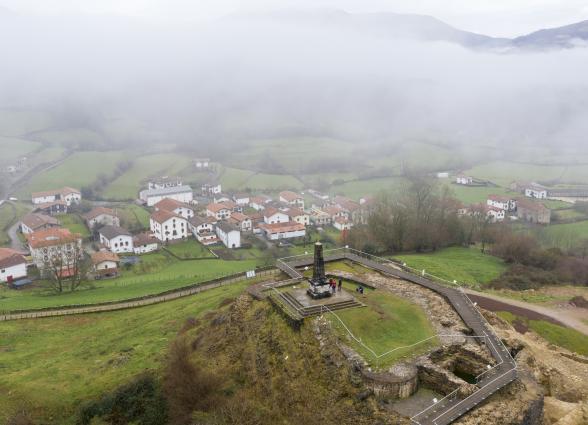
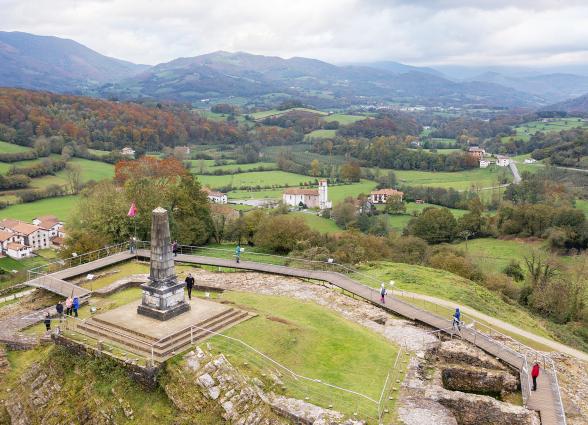
At the top of Mount Gaztelu, the stone barely rises, yet it still marks a spot. The remains, incomplete and scattered, point to a fortress that is no longer there, but whose memory remains linked to resistance and loss. It is not an enclosed space, but an open presence in the landscape. The terrain and the remains allow us to interpret its function without the need for reconstructions, as if the land itself preserved the logic of its defence.
Amaiur/Maya Castle – general information
Amaiur/Maya Castle was a medieval fortress, documented from the 12th century, which evolved over time into a structure adapted for artillery. Its position, in the Baztan Valley, was key to controlling the border with the Ultrapuertos territories. In 1522, it became the last stronghold of Navarrese resistance against the conquest led by the Crown of Castile. A small group of defenders loyal to King Henry II of Navarre held the position during the siege until its fall in August of that same year. Subsequently, the fortress was destroyed to prevent further occupations.
Today, the site has been partially restored thanks to archaeological work by the Aranzadi Society of Sciences and the support of the local community, enabling the original structure to be identified and its function understood.
How to get to Amaiur/Maya Castle?
Access is on foot from the village of Amaiur:
- Start of the route: next to the restored mill located at the entrance to the village.
- Distance: approximately 1.5 km.
- Route: an easy path that crosses a dam and a canal.
- Destination: the summit of Mount Gaztelu, where the castle ruins are located.
What to do at Amaiur/Maya Castle?
The visit focuses on interpreting the landscape and the preserved archaeological remains.
- Amaiur Museum: a space where materials found during the excavations are displayed and the history of the site is contextualised.
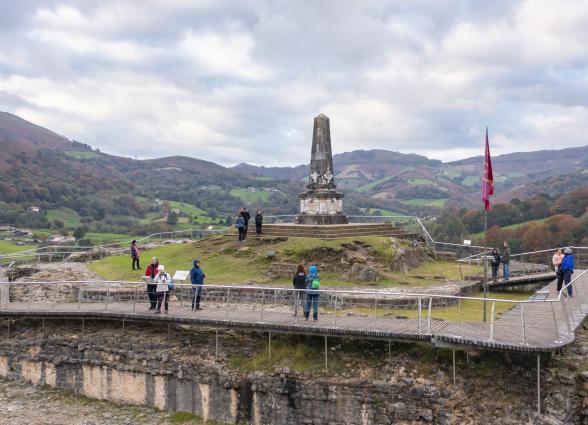
- Archaeological trail: allows you to identify the remains of towers, artillery turrets and other defensive structures.
- Commemorative monuments: such as the obelisk erected in 1922 (later reconstructed) and the one dedicated to the Unknown Resister.
- Natural surroundings: the climb offers sweeping views of the Baztan Valley and helps visitors understand the site’s strategic importance.
- Guided tours: available to explore the historical and archaeological context in greater depth.
Información sobre: Amaiur Castle
-
Javier Castle
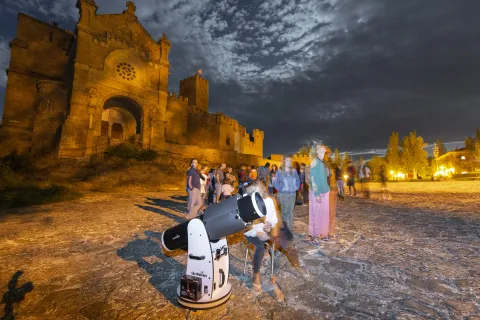
At the top of the hill, where the horizon seems to pause to listen, the stone of Javier Castle holds…
