
Lacabe / Lakabe
Lacabe / Lakabe: a haven of nature and history

Lacabe / Lakabe: a haven of nature and history
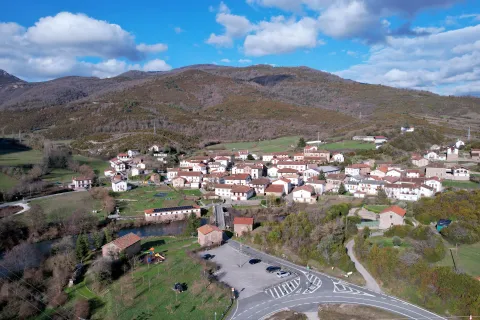
Here, where the wind caresses the slopes of Lakarri, the stones of our houses echo a time that has stood still. The history of Lacabe / Lakabe seems to have been suspended in the silence of the 1960s, but it was reborn with vigour in 1980, when a group of young people breathed new life into the village, which now pulsates with the energy of a new community.
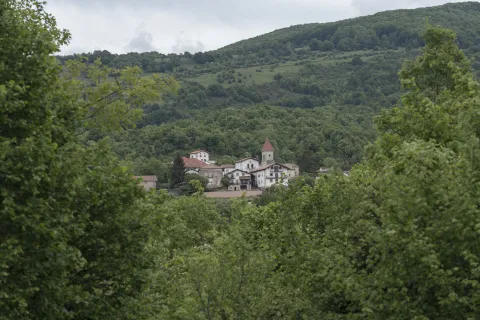
Between the medieval stonework of the walls and the renewed energy of an ecovillage, Lacabe / Lakabe presents itself as a melting pot where past and future meet in harmony. The memory of the former abbots, of those who walk the valley’s paths, and of the new inhabitants committed to self-management, coexist in the tranquillity of the surroundings, creating a scene that reveals itself slowly, like a whisper in the mountains.
Lacabe / Lakabe lies at the heart of the Arce Valley , nestled within the mountains that protect it. Its identity is forged in resilience: after being abandoned in the 1960s, the village was revived in March 1980 thanks to a group of young people who founded a self-managed community. Today, Lacabe is a vibrant ecovillage, a member of the Iberian Ecovillage Network, where life revolves around sustainability and renewable energy.
This small village has moved beyond its past as a former royal estate and now stands as an example of community life that is environmentally responsible. Transport links, once difficult, have improved thanks to the Itoiz reservoir bypass, connecting Lacabe / Lakabe with the rest of the world.
In this picturesque setting, history, nature and sustainability intertwine in a unique way, creating an immersive experience for visitors.

Entrance to Lacabe with a trilingual welcome sign, dirt road, and lush vegetation.

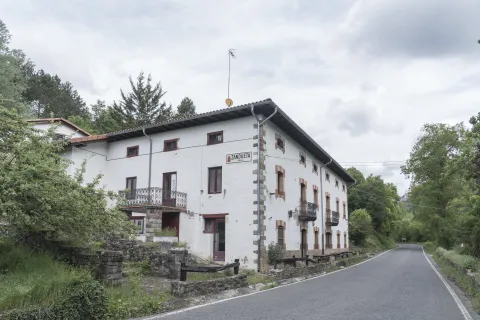
Traditional stone house in Lacabe, Navarrese Pyrenees.

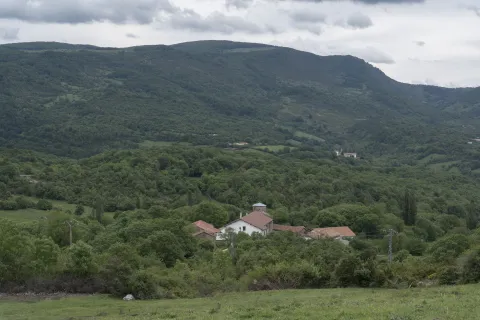
Stone houses in Lacabe, Navarrese Pyrenees, surrounded by vegetation.
Resuelve las dudas más habituales sobre los diferentes parques y zonas naturales: cómo llegar, qué visitar, normas, rutas y servicios para planificar tu experiencia con facilidad.
Online
